Affiliate disclosure: Links to Flippa, Empire Flippers, and Beehiiv in this article are affiliate links. If you buy, list, or subscribe through them, we may earn a commission at no extra cost to you. LetterTrader is mentioned by name only, with no outbound link.
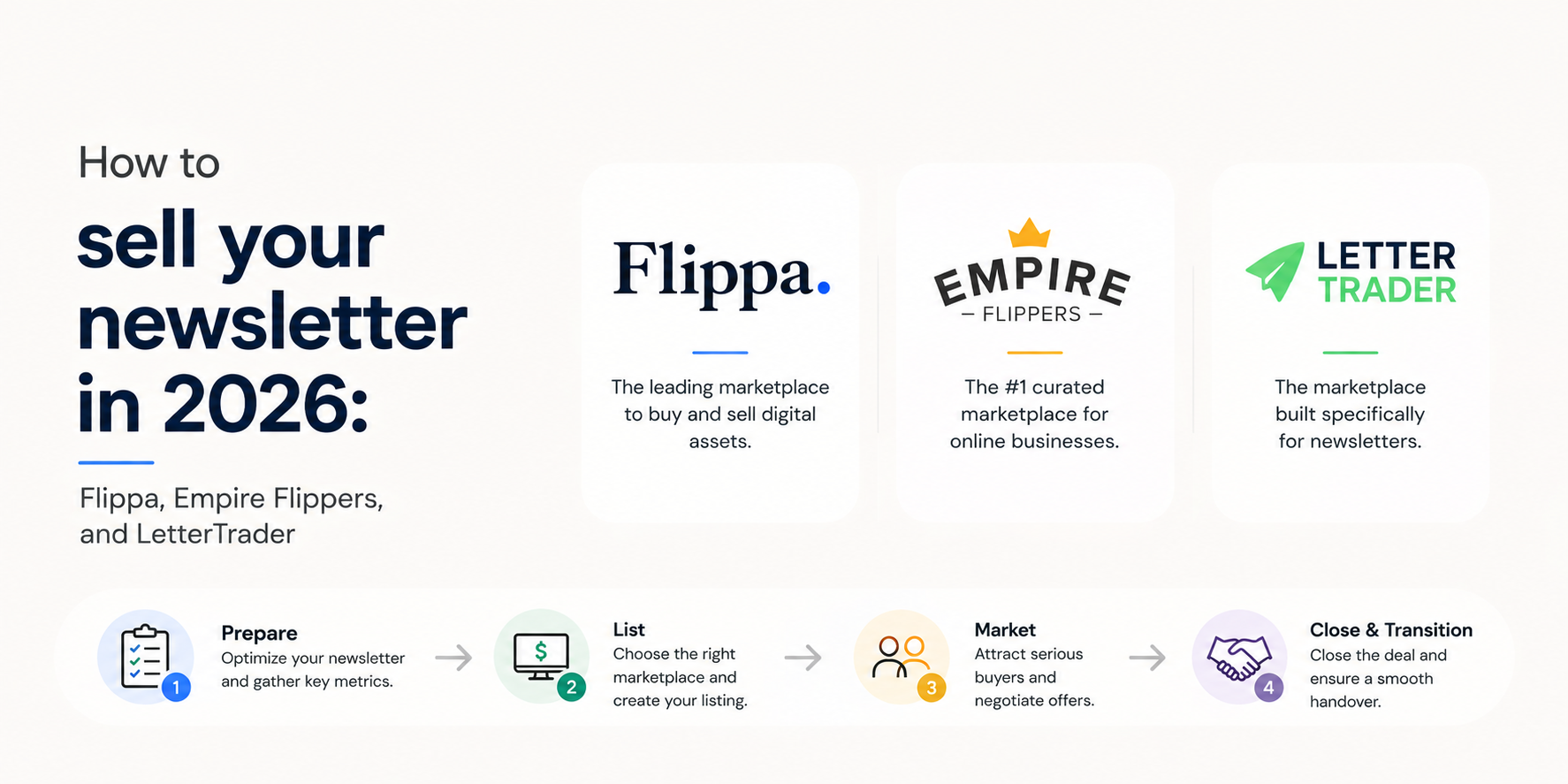
Selling a newsletter is not the same as listing a blog or an ecommerce store. Buyers care about list quality, revenue concentration, churn, and whether the audience will still open emails after you leave. The marketplace you choose matters almost as much as the asking price.
Use your newsletter valuation as a starting range, then pick a venue that actually has buyers at that size.
Quick match: which marketplace fits your valuation?
| Estimated value | Start here | Why |
|---|---|---|
| Under $10,000 | LetterTrader | Newsletter-only marketplace; built for smaller deals |
| $10,000–$60,000 | Flippa | Broad buyer pool in the mid-market. Flippa charges a listing fee. |
| Above $60,000 | Empire Flippers | Vetted brokerage for larger, profitable assets |
Those bands are a practical starting point, not a hard rule. A $8,000 newsletter with clean paid-subscriber metrics can still attract serious buyers. A $70,000 list with messy books and one sponsor paying 80% of revenue may struggle on a premium marketplace.
List on Flippa Explore Empire Flippers
1. LetterTrader (under $10k)
LetterTrader (formerly Duuce) is a marketplace built specifically for newsletters. That focus is the point: buyers already understand open rates, paid conversion, and sponsorships. You are not competing with Shopify stores and SaaS products in the same feed.
Best when:
- Your estimated value is under about $10,000
- Revenue is small, early, or inconsistent, but the list is real
- You want a newsletter-native process (verification, transfer, escrow) rather than a generic website auction
Watch-outs:
- Smaller deal size usually means fewer competing bids
- Buyers will still diligence subscriber quality. A cheap list of unengaged emails does not sell well anywhere
LetterTrader is often the cleanest first stop for creators who are exiting a side project rather than a full media business.
2. Flippa ($10k–$60k)
Flippa is a large marketplace for websites, apps, content businesses, and newsletters. In the $10k–$60k range it is often the most practical place to find a buyer without waiting on a brokerage process.
Best when:
- You have documented revenue (subscriptions, sponsorships, affiliates, or a mix)
- You can present 6–12 months of numbers
- You want a self-serve listing rather than a full broker engagement
Important: Flippa has a listing fee. You pay to list, typically as a non-refundable upfront fee that varies by package. If the newsletter sells, Flippa also takes a success fee. Budget both before you decide the listing is “free exposure.” Optional upgrades (featured placement, extra marketing) cost more.
Watch-outs:
- Listing quality varies. Serious buyers filter hard, so weak listings get ignored
- You will need clean screenshots, traffic/email proof, and a clear handover plan
- Confidential listings and boosts are extra
If your valuation sits in this band, Flippa is usually the default. Just do not list until the P&L, subscriber proof, and content-ownership story are ready. A listing fee on a half-finished package is wasted money.
3. Empire Flippers (above $60k)
Empire Flippers is a vetted brokerage, not a cheap auction board. They attract buyers who are used to paying for profitable, documented online businesses — including newsletters.
Best when:
- Your estimated value is above about $60,000
- The newsletter is consistently profitable (Empire Flippers typically wants meaningful monthly net profit, averaged over a year, plus a real operating history)
- You want help with positioning, buyer screening, and closing
Watch-outs:
- You apply; you do not simply pay a small listing fee and go live
- If you are below their profit threshold, they will send you elsewhere
- Commission is charged on a successful sale, which is normal for this tier of brokerage
For a larger newsletter, the brokerage fee is often worth it. A qualified buyer pool and a structured diligence process usually beat a noisy marketplace listing.
How to prepare before you list
Marketplaces do not fix a messy business. They amplify whatever you already have.
1. Get 12 months of numbers in one place. Revenue by source (paid subs, sponsors, affiliates, products). Costs. Net profit. Churn or unpaid renewal rates if you have a paid tier.
2. Prove the list is real. Subscriber counts from your ESP, open and click rates, growth by month, and how people joined (organic vs paid). Buyers discount lists built entirely on aggressive giveaways or purchased emails.
3. Reduce owner dependence. If the newsletter only works because you personally write every word and sell every sponsor, buyers will haircut the price. Document the writing process, sponsor roster, and any contractors.
4. Clean up legal and access. Who owns the domain, ESP account, Stripe/Substack/Beehiiv payouts, social accounts, and archives? Transfers fail when a brand lives in a personal Gmail.
5. Pick an asking range from profit, not ego. A simple way to sanity-check: annual net profit × a multiple. Multiples move with growth, churn, niche, and how replaceable you are. Use the valuation calculator for a baseline, then compare to live listings in your size band.
Fees in plain language
- LetterTrader: typically structured around a successful sale rather than a Flippa-style “pay to post” listing. Confirm current commission on their site before you list.
- Flippa: listing fee up front, success fee if it sells, optional paid upgrades.
- Empire Flippers: no cheap self-serve listing fee; you go through vetting and pay a commission when the deal closes.
Always read the current fee schedule. Platforms change packages.
Should you sell now or grow first?
Selling is right when you are done operating the list, you have a better use for the capital, or the newsletter has stalled and a new owner would run it better.
Growing first is right when:
- Revenue is lumpy or unproven
- You are still far from the next marketplace tier (for example, $12k vs $60k)
- A few months of monetization or retention work would change the multiple
If you keep building, a dedicated platform such as Beehiiv or Kit makes the eventual handover cleaner than a Frankenstein of tools.
Related articles
- 5 Proven Ways to Monetize Your Newsletter
- How to Calculate Subscriber LTV
- Beehiiv as a Newsletter Platform
Want a number before you talk to a marketplace? Run the free Newsletter Valuation Tool and match the result to LetterTrader, Flippa, or Empire Flippers on the results page.