Affiliate disclosure: This article contains Beehiiv, Kit, and Flippa affiliate links. If you subscribe, buy, or list through them, we may earn a commission at no extra cost to you.
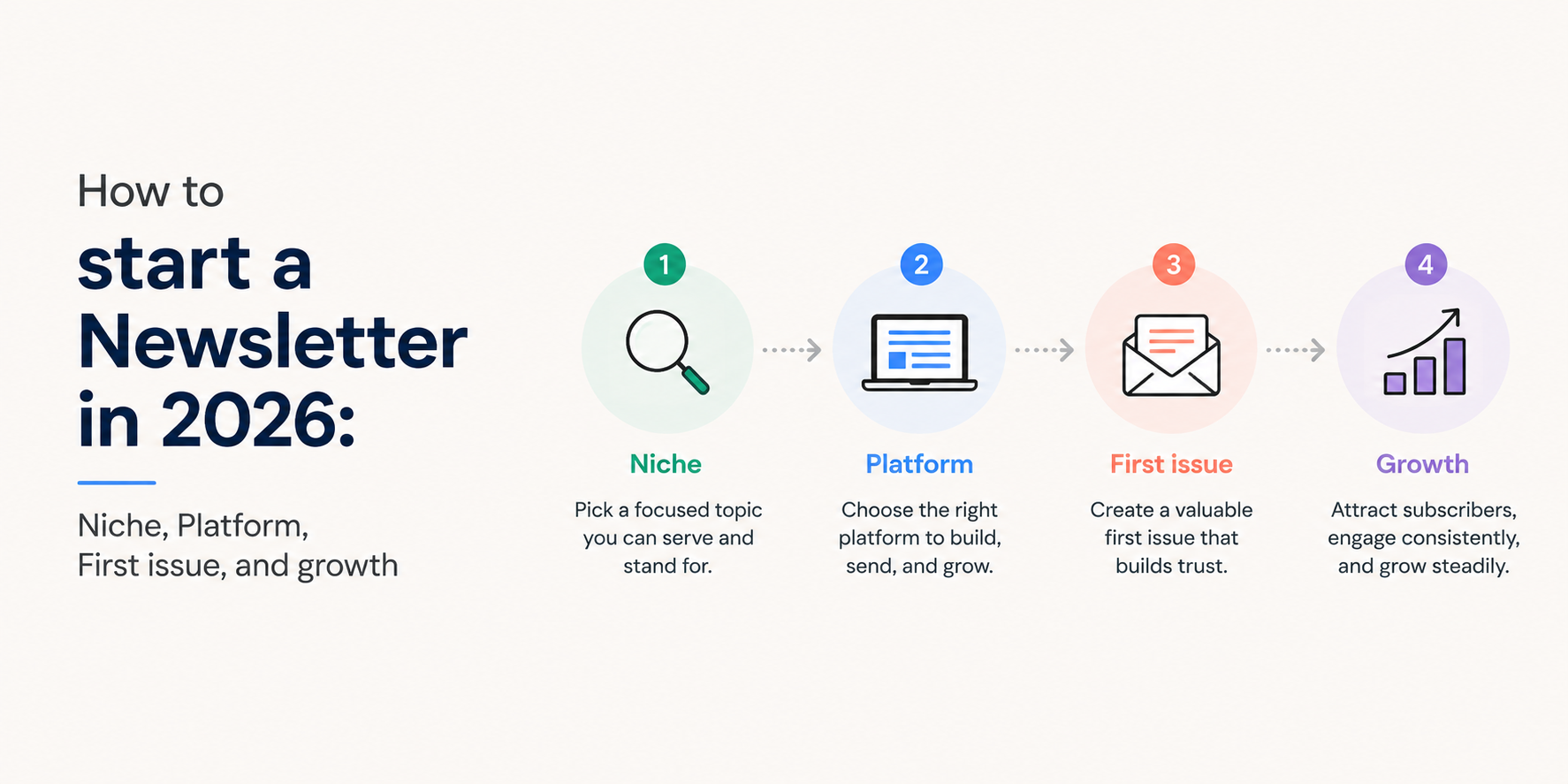
Starting a newsletter is simpler than most “ultimate guides” make it look. You pick a specific reader, make a specific promise, put the list on a real platform, and send on a schedule you can keep. The rest is editing, not mysticism.
You also do not need 10,000 subscribers before you hit publish. A small list that actually opens is a better asset than a bloated one that ignores you.
1. Decide who it is for (and what it is not)
A newsletter without a niche is a blog in an inbox. Find the overlap between what you can talk about for two years and what a defined group will pay attention to.
Write this in one sentence before you touch a tool:
Every [cadence], I help [specific person] [get a specific outcome] without [the usual noise].
If you cannot fill that in, you are not ready to name the publication. Tight beats clever. “Email for indie SaaS founders who hate fluff” outperforms “thoughts on the internet.”
2. Pick a platform: Beehiiv or Kit
Do this before you design a logo. Exporting later is possible; starting in the wrong shape of tool wastes months.
Choose Beehiiv if the newsletter is the product. Beehiiv is built as a publication: write and send, a public archive/site, paid subscriptions, ads/boosts, and a recommendation network for growth. If you want one home for the brand, start here.
Choose Kit (formerly ConvertKit) if the newsletter is the top of a funnel. Kit is a creator email platform: tagging, visual automations, landing pages, and selling courses, products, or consulting off the list. If sequences matter as much as the weekly send, start here.
| You want… | Start with |
|---|---|
| A public newsletter, archive, recs, paid issues in one place | Beehiiv |
| Tags, automations, landing pages, selling from the list | Kit |
You can read the longer breakdowns in the Beehiiv platform guide and the Kit guide. Pick one and ship. Dual-stacking Beehiiv plus Kit on day one is extra ops you do not need yet.
3. Set up the boring infrastructure
On whichever platform you chose:
- A subscribe page with the one-sentence promise and a single field (email). Name and five extra questions can wait.
- A welcome email that restates the promise, points to your best issue (or a short “start here”), and tells people when the next send arrives.
- A cadence you can keep. Weekly is the default that compounds. Daily burns most people out. Monthly is fine if the issue is dense. See ideal frequency before you promise “every Tuesday” in public.
- Unsubscribe that actually works. Trust is part of valuation later, and it is part of deliverability now.
On Kit, add tags from day one (source, interest). On Beehiiv, turn on the public site so issue one is not trapped in a campaign you cannot share.
4. Write issue zero, then issue one
Issue zero is for you: a 400–800 word draft that proves you can fill the promise. Do not send it if it is a mission statement. Send a useful thing.
Issue one should:
- Solve one problem for that specific reader
- Sound like a person, not a brand deck
- End with one clear next step (reply, click, forward)
If you need craft help, use how to write quality newsletters. Subject lines get their own job: boost open rates.
Do not wait for a custom domain, a podcast, and a lead magnet. Those help later. They are not the start.
5. Get the first 50 subscribers without ads
Paid ads on a newsletter you have not written yet is how you buy unsubscribes.
In order:
- Email people who already know you (personally, not a scraped list)
- Put the subscribe link in your bio, site, and existing socials
- Ask readers to forward issue two, not issue one
- Guest in one adjacent newsletter rather than posting into the void
- If you are on Beehiiv, use recommendations once you have a few solid issues — not as a substitute for a point of view
Fifty engaged people teach you more than 500 silent ones. That is also how subscriber LTV starts as a real number instead of a fantasy.
6. Do not monetize in week one (but pick a direction)
You can start free. You should still know which money model you are walking toward: paid subs, sponsorships, affiliates, products, or services. Five monetization paths is enough of a map.
Beehiiv makes paid issues and native promo inventory straightforward. Kit makes selling a product or consulting off tags straightforward. The platform you picked in step 2 should match that direction so you are not migrating at the first dollar.
7. After ten issues, look at the asset
If you have sent ten times and people still open, you have a business seed, not a hobby spreadsheet. Track a short list of metrics that matter: growth, opens/clicks, unsubscribes, and any revenue.
When you want a number, run the valuation calculator. Most new newsletters will not look like a Flippa listing yet. That is fine. The point of starting on Beehiiv or Kit is that the list, archive, and (later) payments live somewhere a buyer or a future-you can actually take over. If you ever sell, read how to sell your newsletter.
A 7-day launch checklist
- Write the one-sentence promise
- Open Beehiiv or Kit and create the publication
- Add a subscribe page and welcome email
- Draft issue zero privately
- Publish issue one to whoever will actually read it
- Ask five people for a forward
- Put the next send on the calendar before you celebrate
Related articles
- Beehiiv for Newsletters
- Kit (ConvertKit) for Newsletters
- How to Find Your Newsletter Niche
- How to Write Quality Newsletters
Already sending? See what the list is worth — even a small, growing newsletter has a number, and the platform you start on shapes how easy that number is to defend later.